▼ List of Favorite Prog Bands
Fragile: Handled with Care
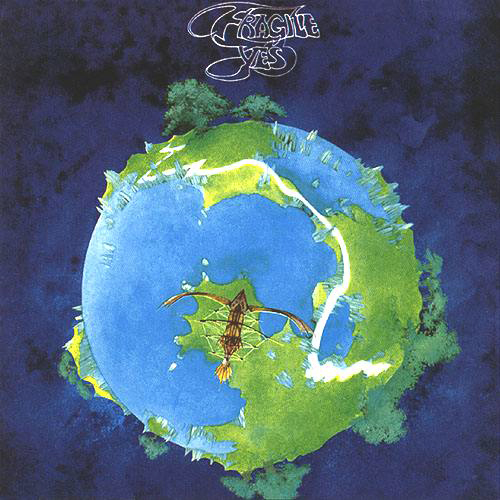 In 1972, in my quest for purchasing albums strictly for their covers, I came upon this little gem. The cover art was so magnificent that there was no question about buying it. I was not disappointed once it hit the turntable, but in fact found this new band to be very much like King Crimson!
They didn't sound like Crimson in any way, but they had that same experimental composition quality that KC possessed. This was by far one of the most unique and interesting bands I'd ever come across. Problem number one: what were they called? Were they called "Fragile" or "Yes"? I combed the cover inside and out and could not find a definitive answer. So, for the time being, I just called them "Fragile Yes". My favorites on the album were "Roundabout" (of course), "South Side of the Sky" and "Heart of the Sunrise". Keyboardist Rick Wakeman had a certain flair for dramatic composition, and use of the Mellotron.
Though I loved Yes, I was never a fan of guitarist Steve Howe. There was something about his style that didn't sit well with me. I didn't hate it, I just had trouble getting into it. However, once "Yessongs" was released, I had become well-acquainted with his playing style. There was just something about his live performances—especially on "Perpetual Change"—that eventually sold me on him. Chris Squire on the other hand, I found to be a very interesting player. His bass lines, in my opinion, defined Yes as a band, and helped make them the stand-out band they were. For the first time, with any prog band that I'd ever heard, a bassist was laying the foundation not only for sound, but style as well.
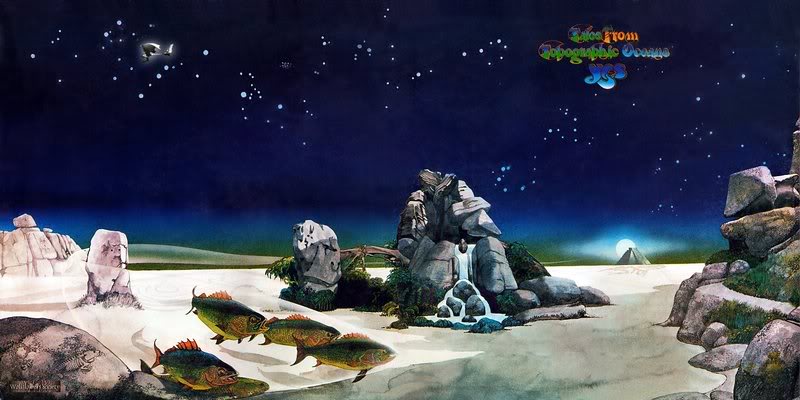
"Tales from Topographic Oceans" can be one of the few LP's in Yes' catalogue"Prog Rock". that underwhelmed me. This album was long, tedious at times, and didn't seem to have any real direction. It was actually a surprise to me that Yes didn't hook me right off the bat with its release. I always felt that this was their strangest album (though many Yes fans might argue this point). Rumors fly about the in-house arguments and tensions in the band, which led to drummer Bill Bruford's decision to quit and join King Crimson. There are also tales about the Anderson/Howe domination of much of the production of the album.
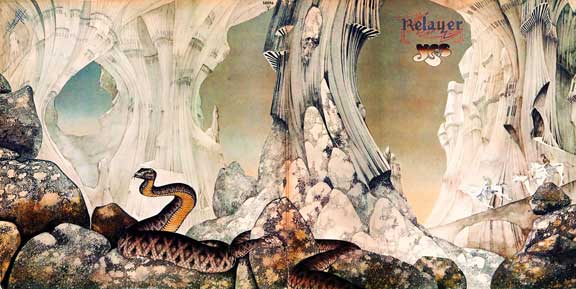
Rumors aside, another marvelous aspect to Yes, is the fact that they could sound so good live. I saw them in concert shortly after the "Fragile" release, and was amazed at how well they delivered on stage. 1972 was a time when re-creating walls of studio sound was not easily duplicated with technology; bands had to do it live on stage, or not at all.