'70s Television Shows
'70s TV felt like a "proving ground" of sorts where culture was being redefined and family standards—at times—were being tested. The '60s had paved the way for American television to branch out, stretch, and push creativity to limitless boundaries.  Some experimentation yielded dynamic results, and in the end, some of the finest television shows of all time were born.
 Since the birth of television, every decade has brought forth a few absolute masterpieces that define the era, and the '70s had more than their fair share.
Ladies of television never looked better, and some were responsible for enormous fashion statements for years to come.
 I always made time to watch "The Waltons", a new TV show that debuted on CBS in 1972. The program depicted a mountain family in the depression-era thirties, and how they battled life's hardships by bonding together. Walton's Mountain is a fictional town that resides in an also fictitious Jefferson County, Virginia. The episodes were near movie-quality, and breathed fresh life into prime time television. I always felt that the main attraction to this show was the feeling of family unity and closeness, something I believe we all wish we had as much as they. It's amazing that shows like this could capture a feeling of longing for a time period we never lived in, proving once again, that television was the ultimate escape.
Sit-Coms
In 1971, producer Norman Lear offered up a healthy dose of racism, ignorance, and working class retardation in the form of its half-hour family sitcom "All in the Family". No social or political issue was safe; this show targeted them all. The show felt awkward, and often assaultive when it first aired, but only until we got used to the frigid water. Archie Bunker not only became a household word with his intolerance to just about anything in the world, but his "Dingbat" wife Edith charmed American audiences. (We all hoped she wouldn't sing). Lovable and ditzy, Edith was the only true anchor to the Bunker household.
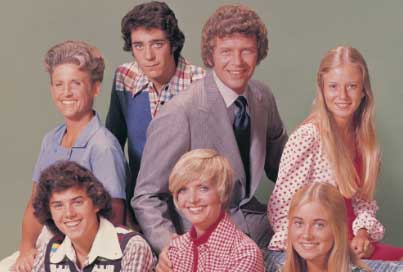 No joy comes without suffering. The "B" side of these wonderful new programs were the painful sitcoms that sprung like weeds in a perfectly manicured lawn. Enter The Brady Bunch. Geared toward younger audiences, the show was basically a take-off on the theme of two feature films: "With Six You Get Eggroll", and "Yours, Mine and Ours". In comparison, The Brady Bunch had nothing whatsoever to offer except to give the viewer a chance to waste thirty non-refundable minutes of life on a weekly basis.
More dumbing-down came in the form of the American Graffiti knock-off "Happy Days". Potsy Webber, Ralph Malph, and the all-American boy Ritchie Cunningham were more punishment than entertainment. However, the pace began to pick up a bit; "Laverne and Shirley" was the closest we've ever come to the return of "I Love Lucy". The show begat in the form of two lame brain gals who work in a beer factory, and their equally dunce neighbors Lenny and Squiggy. Milk and Pepsi anyone?
Though sitcoms became cornier, they had a bit of an edge, and tackled more current sociological issues such as drugs, homosexuality, child abuse, crime, and infidelity. These target issues were deliberately side-stepped in '60s programming which made the era more innocent and less-demanding of our social mores and emotional curves. Still, this is not to say that the '70s sitcoms weren't entertaining. Some most definitely were entertaining and downright hilarious. "Love American Style" was a carry-over program from the '60s made up of hilarious screwball vignettes on the topic of man-woman relationships. My personal favorites contained scenes of a bride groom getting his mouth stuck on a doorknob, and Arte Johnson who is witnessed murdering a blow-up girl doll.
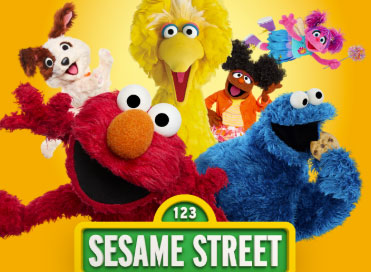 Pure, unadulterated genius came to us in 1969, and became the longest-running children's show in TV history: Sesame Street. This was a tidal wave acheivement in the world of educational television. It seemed that there was no human on earth who could resist the natural Muppet charms&mdashleast of all kids who learned to count and recognize alphabet letters at early ages.
 1971 ventured further into television experimentation by doing something different: the 90-minute drama "The NBC Mystery Movie" which was an umbrella program (one that rotates different shows througout the month),. NBC's Mystery Movie introduced us to some of television's greatest moments. Columbo, McCloud, McMillan and Wife, among others were immensely popular. Even Night Gallery found a place in this program before moving into its own time slot.
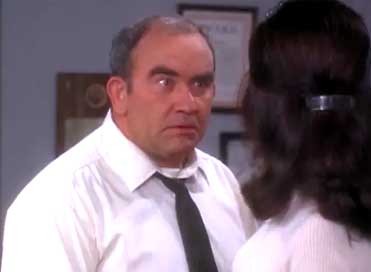 "You've got spunk. I hate spunk!!"said newsroom producer Lou Grant to Mary Richards' during her job interview at WJM. When The Mary Tyler Moore Show appeared on the scene, we were treated to one of the most diverse crowd of lunatics ever tethered together for one sitcom. These goofballs made up the WJM bottom-of-the-barrel newsroom. MTM was indeed a charmer; she could cry-on-cue better than lucy; her nervous stammer was on parr with Don Knotts, and her sweetness sparkled with a bit of naivete, was never so far-fetched that we couldn't fall for it. Plus, the writing made this one of the best shows ever.
 The Odd Couple was a hilarious romp through the lives of two of the most mis-matched people in New York City. It was a pearl in the ABC oyster. Neil Simon's terrific characters were portrayed (much better in my opinion) on television than in the movie of the same title. When two diametrically opposed opposites connect like magnets, the thoughts of pizza-stained sweatshirts and Spic N' Span meld together like music and lyrics.
'70s no-brainer sitcoms ruled in popularity with entries such as "Chico and the Man," "Sanford and Son," and "Welcome Back Kotter." More popular sitcoms were the likes of "Alice," "WKRP in Cincinatti," "One Day at a Time," and "The Ropers," which held high TV positions.
Spin-Offs
TV show spin-offs were often perfect in cashing in on past successes of their parent programs. There were some spin-offs in the '70s that were very successful. Not all were spun off of comedies; some became television dramas. In some instances, there were two spin-offs, or spin-offs of the spin-off.
- The Mary Tyler Moore Show Spin-offs: Lou Grant, Rhoda, and Phyllis
- M.A.S.H. Spin-off: Trapper John, M.D.
- All in the Family Spin-offs: Archie Bunker's Place, The Jeffersons, Maude
- Maude Spin-off: Good Times ("Florida" was Maude's 1 & 2 season's Housekeeper)
- The Brady Bunch Spin-off: Brady Bunch Kids and The Brady Bunch Variety Hour
- Spin-Off from the made-for-TV Movie "The Night Stalker": Kolchak
From the Heart
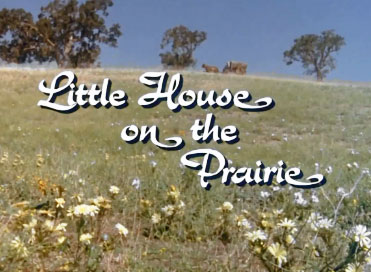 "You can take that to the bank," to quote Robert Blake as one of television's most interesting detectives "Baretta". Blake's own natural humor was a support beam for this program that really needed no help to be entertaining. Light-hearted dramas and action shows were rare, and cherished. It was a very good combination, and not a lot of the programs offered the approach. "Baretta" was one of the few. From the heart shows were few, with many attempts to cash in on the success of "The Waltons." Some were good, some weren't. On the unsuccessful side were shows like "Apple's Way", "The Smith Family," and ultimately "Family." However, one show did move on to be a major success: "Little House on the Prairie."